
Cutting edge publications and research
from the IVF Academy Team.
How to Become an Embryologist: Education, Skills, and Career Path
TL;DR: Most embryologists begin with a bachelor’s degree in biology, biochemistry, genetics, biomedical science, animal science, or another life science. From there, they build specialized reproductive medicine knowledge through focused embryologist schooling, hands-on lab training, and supervised clinical experience.
- Medical school is not required to become an embryologist, but the role demands strong scientific understanding, technical precision, and careful attention to quality control.
- Embryologists work in IVF laboratories, supporting oocyte assessment, fertilization, embryo development, cryopreservation, documentation, and other clinical embryology responsibilities.
- Related IVF lab roles include andrologists, who focus on male fertility testing and sperm preparation, and IVF lab technicians, who support daily lab operations.
- Embryologist education requirements vary by clinic and position, but many pathways begin with a life science degree followed by an embryologist training program or certificate pathway.
- Hands-on embryologist programs can help students build bench readiness, understand IVF lab workflows, and prepare for entry-level roles or supervised clinical training.
- Career progression may begin with trainee, andrology, or IVF lab technician roles before advancing toward clinical embryologist, senior embryologist, lab supervisor, or laboratory leadership positions.
Most embryologists begin with a bachelor’s degree in biology, biochemistry, genetics, biomedical science, animal science, or another life science. From there, they build specialized knowledge in reproductive medicine. To become an embryologist, you must also gain supervised, hands-on experience in the IVF laboratory.
Medical school is not required to become an embryologist, as it is a laboratory-based role. With that said, it still demands advanced scientific understanding and careful technical training.
In this guide, we’ll explain the pathway to becoming an embryologist, so you can pursue this path and become an integral part of the IVF process.
What Does an Embryologist Do?
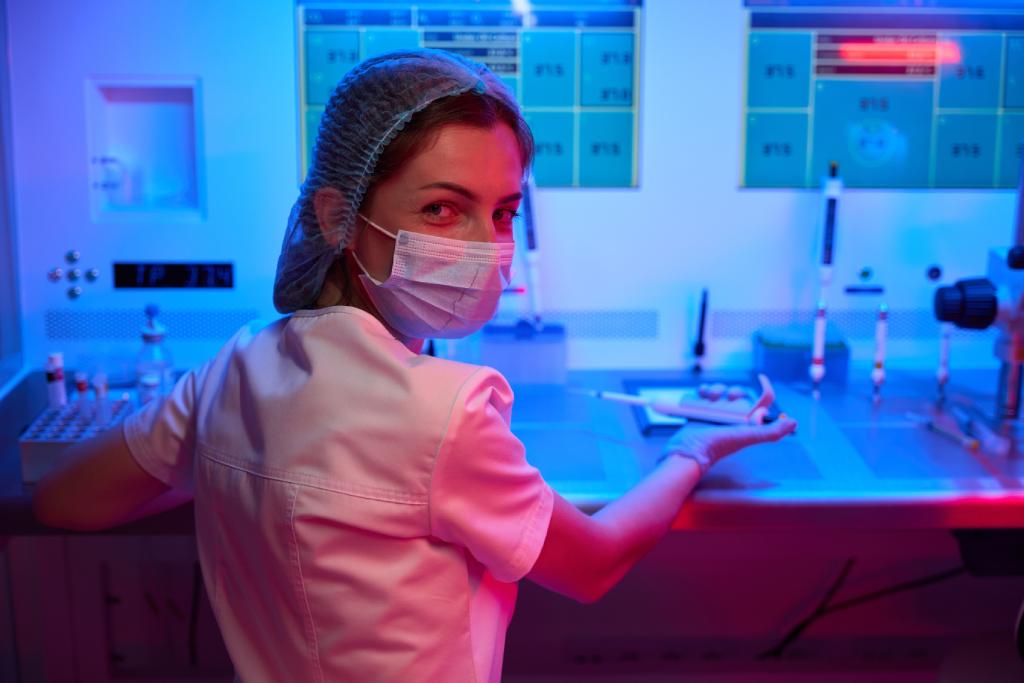
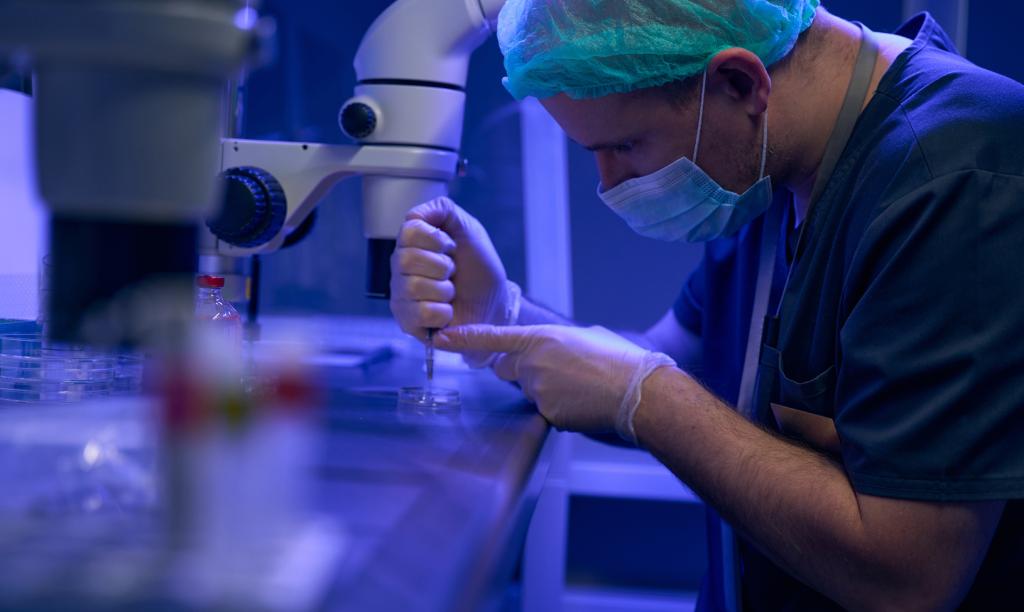
Embryologists are essential members of the fertility care team, working inside the IVF laboratory.
Depending on their role and level of experience, an embryologist may:
- Prepare sperm samples
- Assess oocytes
- Support fertilization procedures
- Monitor embryo development
- Assist with embryo biopsy
- Perform cryopreservation tasks
- Maintain lab documentation
- And more
Embryologists also help uphold the quality control systems that keep the laboratory safe, and safety and precision matter in this field. Every specimen belongs to a patient or couple hoping to build a family. That responsibility shapes how embryologists are trained and, ultimately, how they practice.
Embryologist vs. Andrologist vs. IVF Lab Technician
When researching how to become an embryologist, it helps to understand how different IVF laboratory roles work together. Embryologists, andrologists, and IVF lab technicians all support fertility treatment, but their roles are not identical.
What is an Embryologist?
Embryologists focus on oocytes, fertilization, embryo development, embryo grading, cryopreservation, and other highly specialized clinical embryology procedures. This role requires strong scientific knowledge, careful technique, and supervised hands-on experience in the IVF laboratory.
What is an Andrologist?
Andrologists focus on male fertility testing and sperm preparation. They may perform semen analysis, sperm washing for IUI or IVF, sperm cryopreservation, and other procedures that support the fertilization process. For many aspiring embryologists, andrology can be an important first step because it builds foundational skills in gamete handling, lab safety, and quality control.
What is an IVF Lab Technician?
IVF lab technicians often support the daily function of the IVF laboratory through media preparation, dish setup, labeling, equipment checks, documentation, and other essential lab tasks. This can be an entry-level pathway for candidates who are still building the embryologist education and hands-on skills needed for more advanced responsibilities.
Embryologist Education Requirements
Most embryologist education pathways begin with a strong undergraduate science foundation. Common degree areas include biology, molecular biology, genetics, biochemistry, reproductive science, physiology, medical laboratory science, and others.
Exact embryologist education requirements vary by clinic and position. A bachelor’s degree may be enough for some entry-level roles, especially when paired with relevant lab experience. Other positions may prefer a master’s degree or completion of a focused embryology certificate pathway.
Traditional science coursework can teach the theory, but embryology is high-stakes and, thus, requires a higher level of preparedness. The best embryologists have hands-on experience and deeply understand how careful technique supports patient care.
Embryologist Schooling: How Long Does It Take?
For many future embryologists, the first step is a four-year undergraduate degree in biology or a life science field followed by an embryologist training program soon after to begin building practical IVF laboratory knowledge as soon as possible. Some then go on to pursue graduate-level and doctoral degree in clinical embryology, reproductive biology, or laboratory science.
A focused training pathway is a strong path for science graduates who are confident that they want to move into fertility care. Instead of studying reproduction only in theory, students can begin learning the procedures, terminology, equipment, and quality expectations used in real IVF laboratories.
Choosing an Embryologist Program
The right embryologist program should help you understand the science of embryology as well as the practical expectations of the IVF laboratory. The strongest programs help students develop competence and confidence with the tools and techniques used in reproductive laboratories.
At a minimum, the best programs cover:
- Reproductive physiology
- Embryology fundamentals
- Andrology
- Lab safety
- Quality control
- Culture conditions
- Cryopreservation concepts
- IVF lab workflows
- Problem-solving
- Lab leadership
In essence, your training should bridge the gap between classroom science and career preparation.
What Skills Do Embryologists Need?
Embryology is a highly technical field, but success depends on many skills outside of pure science knowledge, such as:
- Manual dexterity: Embryologists work with delicate cells, specialized equipment, and microscopic movements that require steady hands.
- Attention to detail: Labeling, documentation, timing, and quality control must be handled with extreme care in the IVF laboratory.
- Scientific understanding: A strong foundation in biology, reproductive physiology, genetics, and laboratory science supports safe and informed decision-making.
- Emotional resilience: Fertility care can be deeply meaningful, but not every cycle leads to the outcome patients hope for.
- Communication and teamwork: Embryologists work closely with many other professionals to support coordinated patient care.
- Commitment to ongoing learning: Embryologist education does not stop after a degree or certificate. The field continues to evolve, and embryologists must keep building their knowledge and technical skills.
These skills are difficult to develop through classroom learning alone. As a result, hands-on embryologist schooling and supervised IVF lab training are essential.
Career Pathways After an Embryology Certificate
An embryology certificate can help early-career lab professionals take the next step toward fertility laboratory work. While a certificate doesn’t replace supervised clinical experience, it can strengthen your preparation and help demonstrate practical readiness for entry-level roles.
Career Pathway | What This Role May Involve |
Junior or Trainee Embryologist | Supporting IVF lab workflows while building supervised experience in oocyte handling, fertilization support, embryo assessment, and cryopreservation concepts. |
Andrology Specialist | Performing semen analysis, sperm preparation, sperm washing, and cryopreservation. This can be a strong entry point for students pursuing a long-term embryology career. |
IVF Lab Technician | Assisting with media preparation, dish setup, labeling, equipment checks, quality control documentation, and daily lab operations. |
Research or Biotech Role | Applying reproductive science knowledge in clinical research, medical device support, laboratory quality control, or fertility-related biotechnology. |
A focused embryologist training program can provide the practical foundation needed to pursue supervised experience and continue growing in the field.
Embryologist Career Progression
An embryology career usually develops in stages. Most professionals begin by building foundational IVF lab experience, then gradually take on more advanced procedures and responsibilities.
Early-career Embryologists
Early-career embryologists often start as trainees, junior embryologists, andrology specialists, or IVF lab technicians. At this stage, the focus is on learning lab workflows, supporting dish preparation and quality control, assisting with andrology tasks, and observing senior embryologists during clinical procedures.
Clinical Embryologists
Clinical embryologists continue building supervised experience with oocyte handling, fertilization support, embryo assessment, cryopreservation concepts, and other core laboratory responsibilities. This stage is where strong embryologist education and hands-on embryologist schooling begin to translate into practical clinical confidence.
Senior Embryologists and Lab Supervisors
Senior embryologists and lab supervisors may support more advanced procedures, troubleshoot lab variables, train junior staff, and help maintain quality systems. Over time, some embryologists move into broader laboratory leadership, including lab management or director-level responsibilities.
Start Your Path Toward Embryology
Becoming an embryologist demands hands-on training and a serious commitment to laboratory excellence, but it’s an exciting and rewarding career path for those seeking a role that’s both technical and focused on patient care.
For aspiring reproductive science professionals, IVF Academy USA offers a practical pathway into the field through training designed to support real IVF laboratory readiness. Students can build the foundation they need to understand andrology and embryology, and develop technical confidence.
Take the next step toward a career in fertility care. Get your career as an Embryologist started at IVF Academy.